
Class of 2026
The second class of the Penn State Sports Hall of Fame includes athletes and coaches from four sports.
Criteria for the Penn State Sports Hall of Fame was based on impact to Penn State athletics. Former athletes must be four years removed from their playing days and former coaches must be one year removed from coaching. In order to keep the Penn State Sports Hall of Fame representative of all sports, no more than four of the eight class members could have primary contributions as football players or coaches.
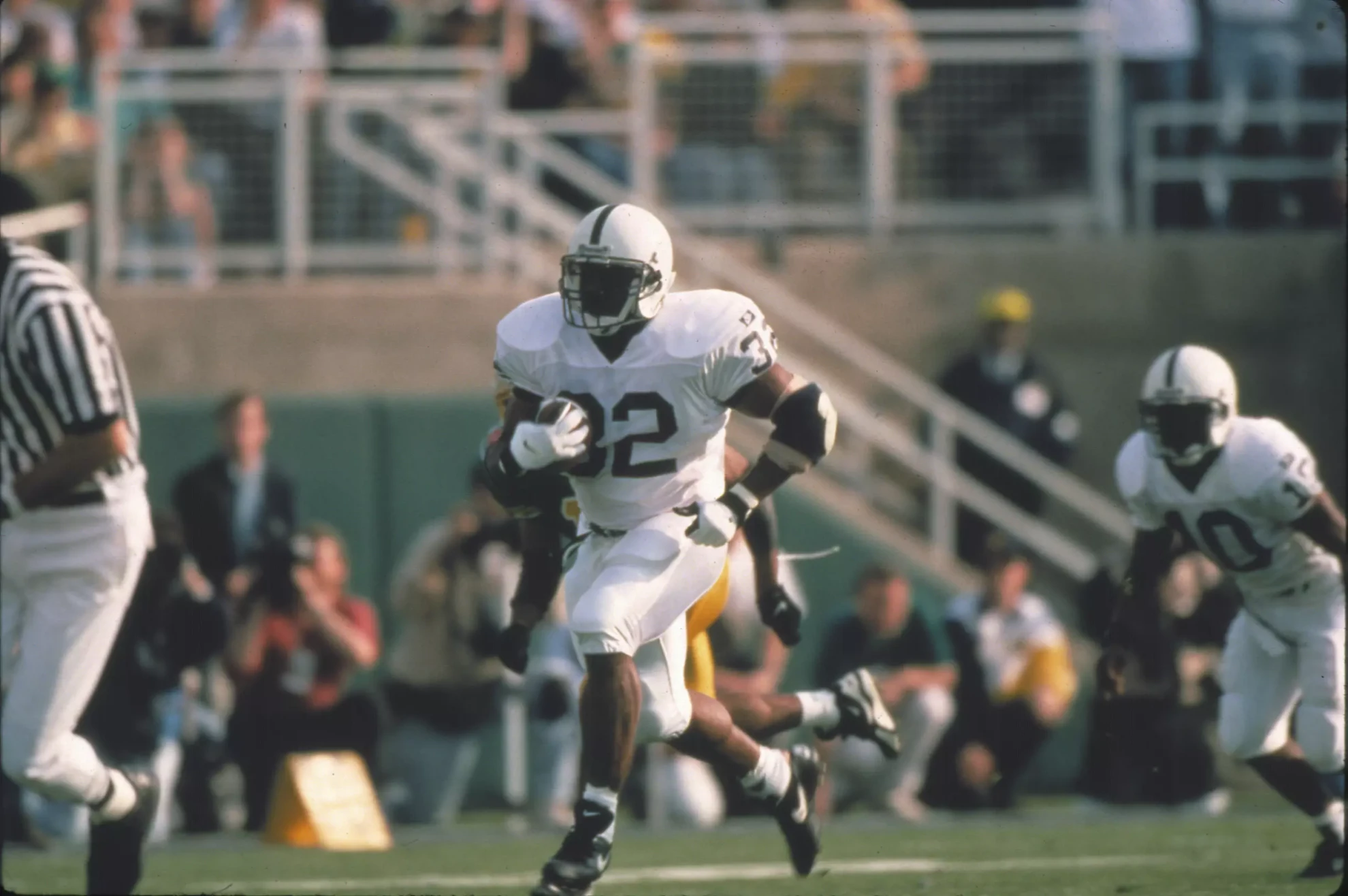
Ki-Jana Carter
Years: 1992-1994
Sport: Football
Position: Running Back
Read More
One image probably remains most vivid for Penn State fans regarding Ki-Jana Carter. It was an 83-yard touchdown run on the first play from scrimmage against Oregon in the 1995 Rose Bowl.
Carter took a toss to the right side, found a hole between the guard and tackle, lowered his shoulder and broke a couple of tackles. Then he broke free, raced away from any would-be tacklers and coasted into the end zone.
Carter’s big-play ability defined his career. Even in Penn State’s rich running back history he ranks first among all those backs — averaging 7.2 yards per rush. He finished his career with 2,829 rushing yards.
He was part of a powerful, record-setting offense for Penn State’s 1994 Big Ten Conference championship team that finished 12-0 but was prevented from playing for a national championship.
Carter, who was named MVP of that 1995 Rose Bowl, was a consensus All-America selection as a senior. He played just three seasons at Penn State after Penn State coach Joe Paterno encouraged him to forego his senior season to enter the NFL Draft.
He was inducted into the College Football Hall of Fame in 2026.
(Image via National Football Foundation)
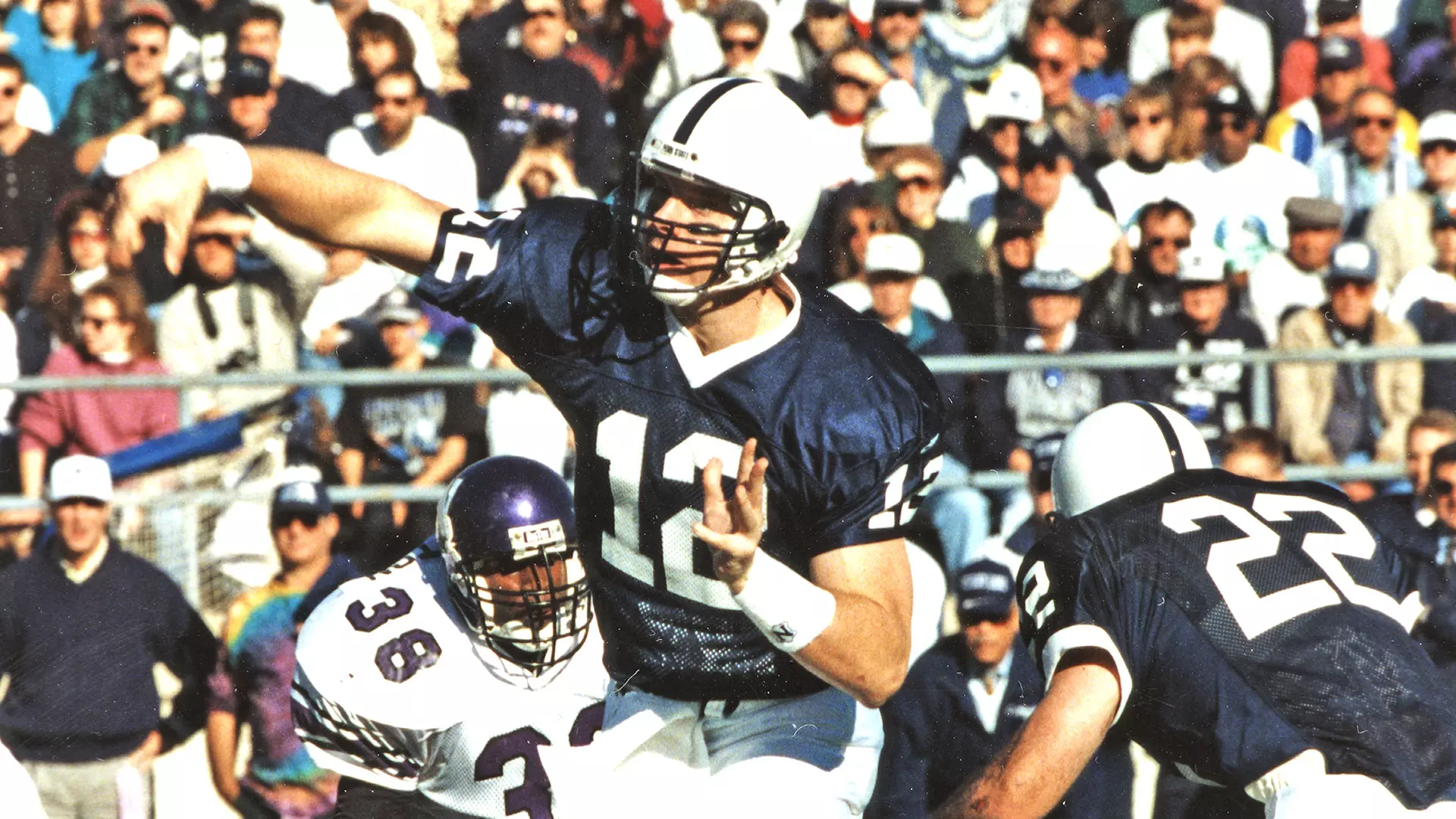
Kerry Collins
Years: 1991-1994
Sport: Football
Position: Quarterback
Read More
With Kerry Collins under center, Penn State went 40-9 overall and 22-2 in its first two seasons (10-2 in 1993, 12-0 in 1994) in the Big Ten Conference.
He led the team to three New Year’s Day bowl games and was a consensus first-team All-American in 1994, when he earned both the Maxwell Award as the national player of the year and the Davey O’Brien National Quarterback Award as the nation’s best quarterback.
During his college career, the 6-foot-4 right hander from West Lawn, Pa., completed 370 of 657 passing attempts for 5,304 yards, with 39 touchdown passes and 21 interceptions.
Penn State’s 1994 offense led the nation in scoring (47.8 points per game) and total offense (520.2 yards per game). The unit broke 14 school season records and seven Big Ten season marks for: points scored (526), touchdowns (71), points per game for all games (47.8), points per game for conference games (48.1), total offense (5,722 yards), total offense per game (520.2 yards per game) and yards gained per play (7.64).
Collins was inducted into the College Football Hall of Fame in 2018.
Image via National Football Foundation
Joe Battista

Years: 1978-2012
Sport: Ice Hockey
Positions: Player, Coach, Contributor
Read More
No person was more instrumental in the growth of ice hockey at Penn State than Joe Battista.
Before there was the modern iteration of Division I hockey at Penn State, Battista’s fingerprints were all over the Penn State club hockey program, called the Icers. Battista captained the team in the early 1980s before becoming its coach in 1987.
He won six ACHA national titles as head coach – and led the team to 10 straight title appearances. He finished his time as head coach with 512 wins.
But after he left coaching at Penn State, Battista played a key role in securing the donation from Terry Pegula and his family to fund NCAA Division I men’s and women’s ice hockey at Penn State. Pegula – a Penn State alumnus himself – brought his son to Battista’s camps at Greenberg Ice Pavilion. That prompted the curiosity from Pegula as to why Penn State didn’t have a Division I team. Through the partnership with Battista, Penn State began Division I play in 2012-13.
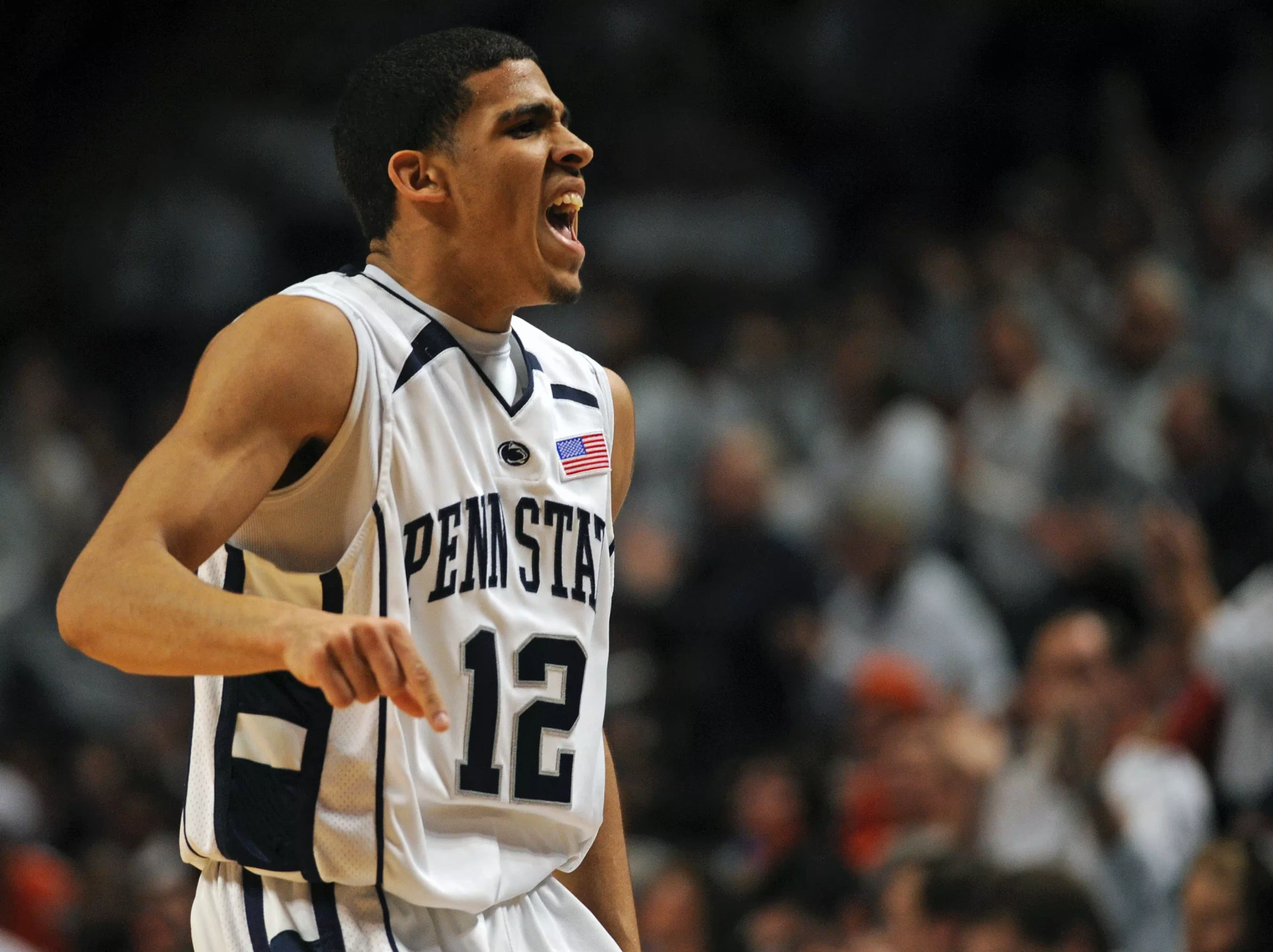
Talor Battle
Years: 2007-2011
Sport: Basketball
Position: Point Guard
Read More
As the 21st century’s best Penn State men’s basketball player to date, Talor Battle helped break a 10-year NCAA Tournament drought in his senior season, averaging 20.2 points per game.
Battle was also a key figure in Penn State’s 2009 NIT championship.
Battle finished his career at Penn State as the program’s all-time leading scorer – and remains that way as of his induction into the PSSHoF – with 2,213 career points. He ranks fourth all-time in assists at Penn State and third all-time in three-pointers made.
In 2011, Battle became the first Big Ten player to reach 2,000 career points, 500 career rebounds and 500 career assists. He earned first-team All-Big Ten honors in 2009 and 2011 and was named to the second-team All-Big Ten in 2010.
Battle recently returned to Penn State for the second time as an assistant to Mike Rhoades.
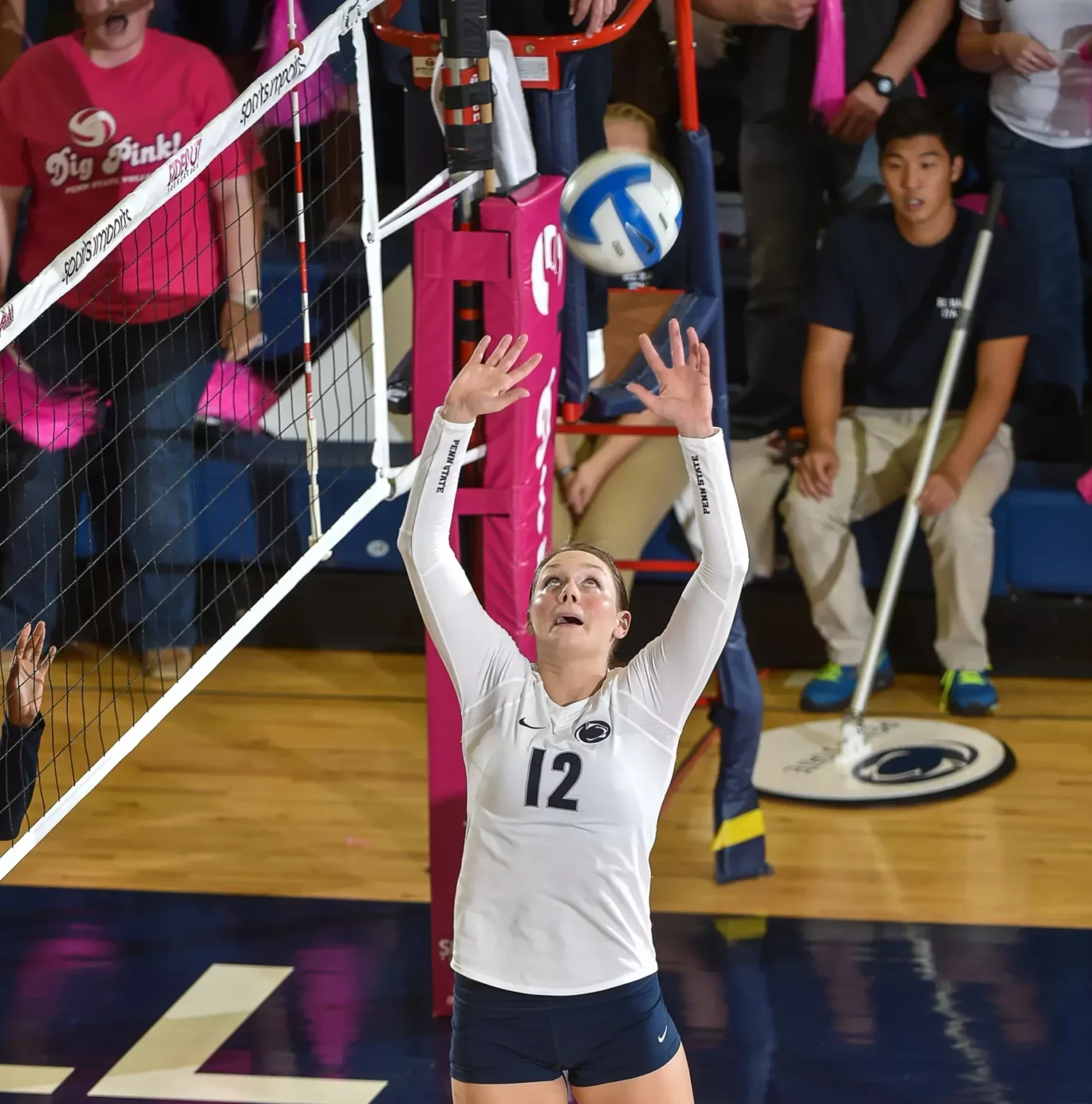
Micha Hancock
Years: 2011-2014
Sport: Volleyball
Position: Setter
Read More
“Micha is just a badass,” Deja McClendon said of the Penn State setter in 2015.
Micha Hancock was largely the reason that Penn State won back-to-back national championships in 2013 and 2014.
More specifically, Micha Hancock’s serve was largely the reason that Penn State won those two titles – the final two of fellow PSSHoF 2025 inductee Russ Rose’s career.
The setter from Oklahoma owns the Penn State career record for aces with 380. She also owns the NCAA single-season record for aces with 126, which she did in that 2014 season as well as the NCAA Tournament record for aces with 22, which she did as a freshman.
During her four years, she was named Big Ten Freshman of the Year, Big Ten Setter of the Year twice, NCAA Championship MOP, and AVCA National Player of the Year – one of only four Penn State women to earn that title.
Kelly Mazzante
Years: 2000-2004
Sport: Basketball
Position: Guard
Read More
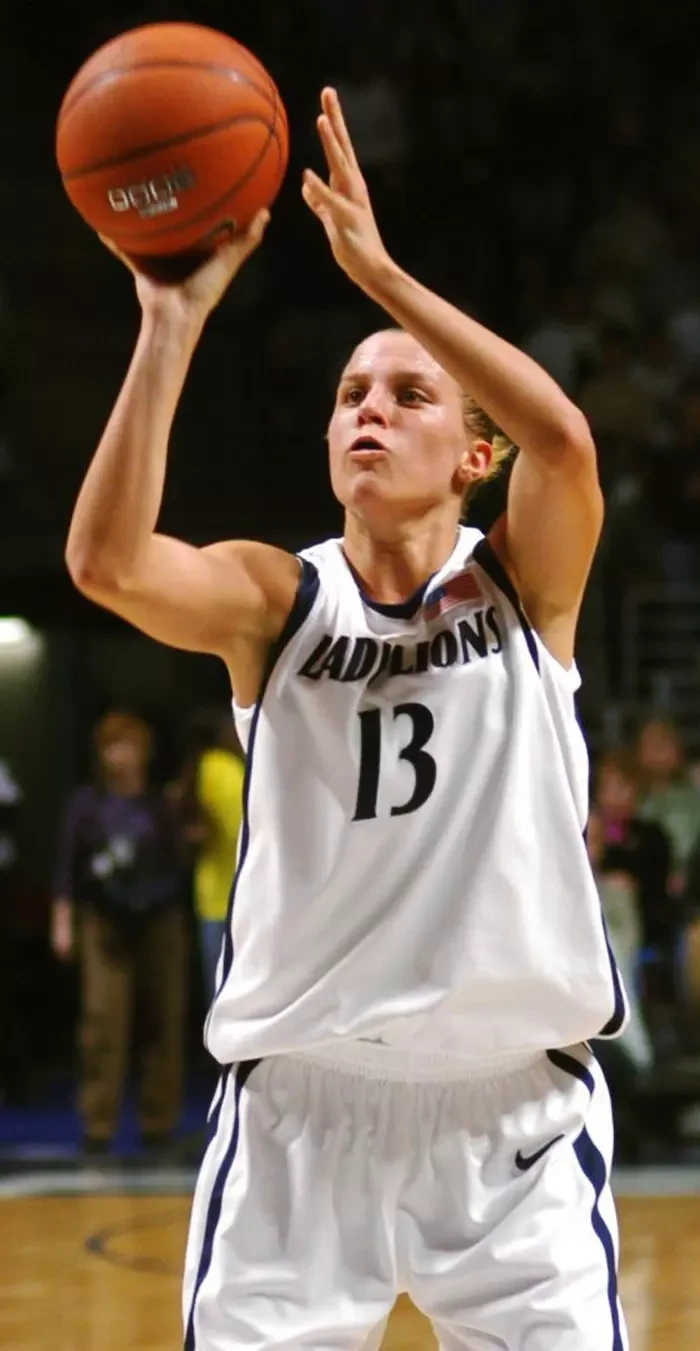
Kelly Mazzante’s career was a local girl-made-good story that launched the Penn State women’s basketball program to some of its greatest heights.
Mazzante made the most of the 3-point shot and set Penn State’s all-time scoring record with 2,919 points. She averaged 21.9 points per game and scored 30 points in a game 27 times, including a record 49 points in one game and nine made 3-point shots.
She contributed on both ends of the floor, all over the floor, actually. Mazzante grabbed 563 rebounds with 289 steals and 237 assists during her career.
Mazzante was named National Freshman of the Year in 2001 and was the first player to earn four first-team All-Big Ten selections in conference history. She was also the first player to lead the Big Ten in scoring in her first three seasons. In 2004, she was named the Big Ten Female Athlete of the Year. She earned three WBCA and USBWA first-team All-American honors in addition to two Associated Press first-team All-American nods.
From nearby Montoursville High School, the team’s success and Mazzante’s popularity helped the Lady Lions pack the Bryce Jordan Center several times during her career.
Paul Posluszny
Years: 2003-2006
Sport: Football
Position: Linebacker
Read More
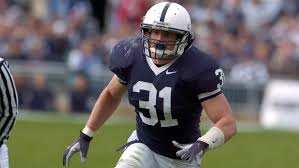
The first great linebacker of the 21st century, Paul Posluszny was a key figure in lifting Penn State out of the “Dark Years.”
And much of that legacy came from one set of downs against Indiana in 2004. With just over two minutes to play, Indiana drove to the 1-yard line with Penn State leading by six points. Posluszny made two crucial stops, including the tackle on fourth down that secured the win for Penn State in the second-to-last game of the season.
Penn State did not lose again until October of 2005 and reached the Orange Bowl in 2005 – in part because of his stout defense.
In 2005, he won the Bednarik and the Butkus Awards. Posluszny remains the only player to this day to win the Bednarik Award twice and joined fellow Penn State linebackers LaVar Arrington and Dan Connor in winning the award.
He also served as a captain as both a junior and senior – something of a rarity under Joe Paterno – and was later drafted by the Buffalo Bills in the second round in 2007. In 2024, the linebacker was inducted into the College Football Hall of Fame.
Wally Triplett
Years: 1945-1948
Sport: Football
Position: Running Back
Read More
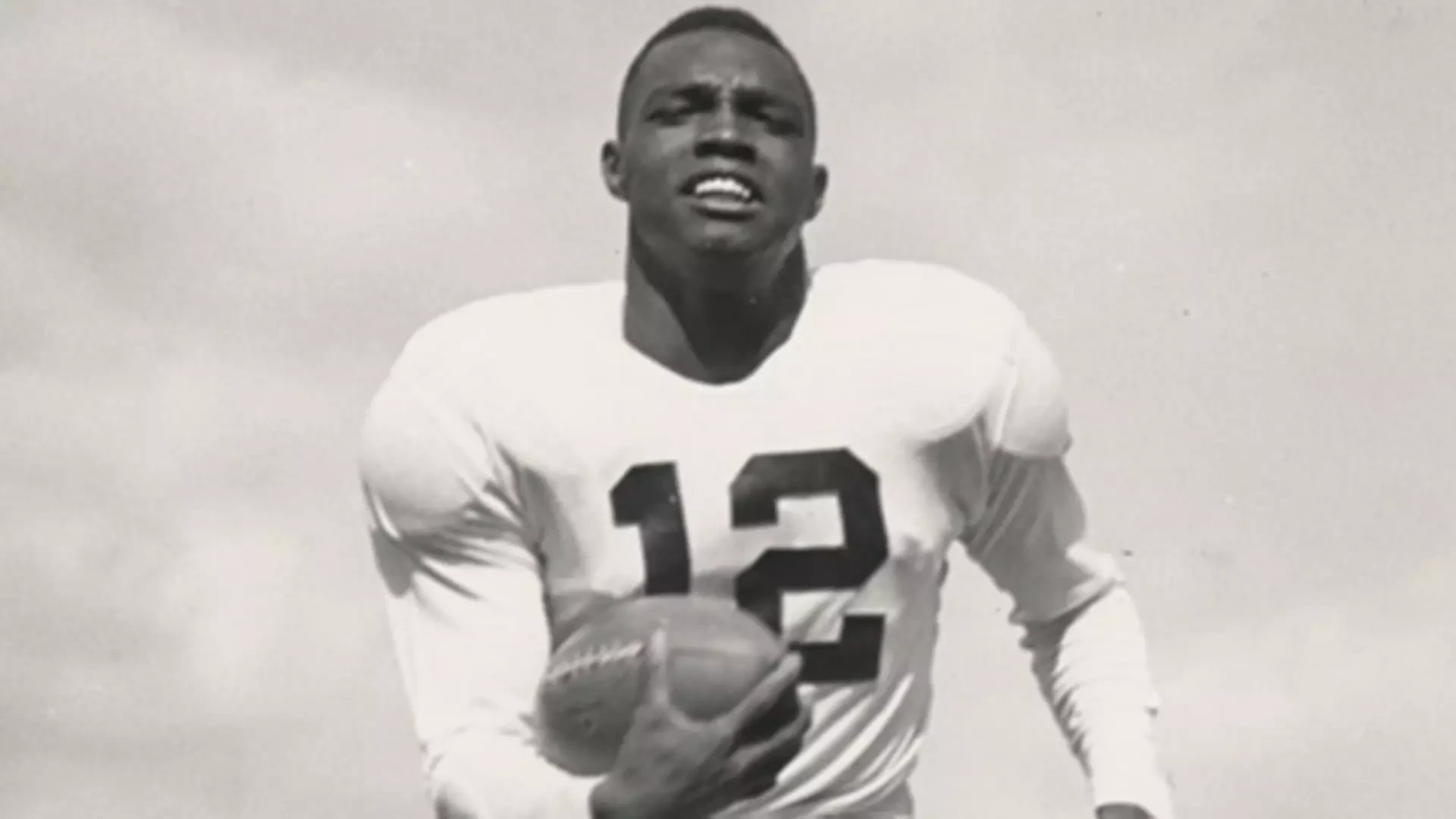
Wally Triplett could not live in Penn State dorms because he was Black (instead staying in a downtown rooming house) but his place in Penn State history — on campus and beyond — is secure simply because of his presence.
Triplett was the first Black player to play in a varsity football game at Penn State. He came to Happy Valley on an academic scholarship, after losing a football scholarship to the University of Miami when he informed school officials, who had offered him the scholarship that he was not white.
Then, in 1946, Penn State was scheduled to play at Miami but instead canceled the game because Southern schools refused to compete against integrated teams. That cancellation and a subsequent 1948 Cotton Bowl Classic, in which Triplett became the first Black player in the game’s history, secured Triplett’s spot in Penn State history — albeit part legend and part lore.
That Cotton Bowl is infamously associated with Penn State’s “We Are!” cheer because when the possibility of competing without Triplett arose, the team circled around their teammate and said they would not compete without him. In 2018, Triplett was inducted into the Cotton Bowl Hall of Fame.
Class of 2025
Through an open election process that included a nomination and then voting process by Penn State fans, 17 names were chosen for the inaugural class of the Penn State Sports Hall of Fame.
Criteria for the Penn State Sports Hall of Fame was based on impact to Penn State athletics. Former athletes must be four years removed from their playing days and former coaches must be one year removed from coaching. In order to keep the Penn State Sports Hall of Fame representative of all sports, no more than six of the 17 class members could have primary contributions as football players or coaches.
Jesse Arnelle
Years: 1951-1955
Sports: Basketball, Football
Positions: Forward, Receiver
Read More
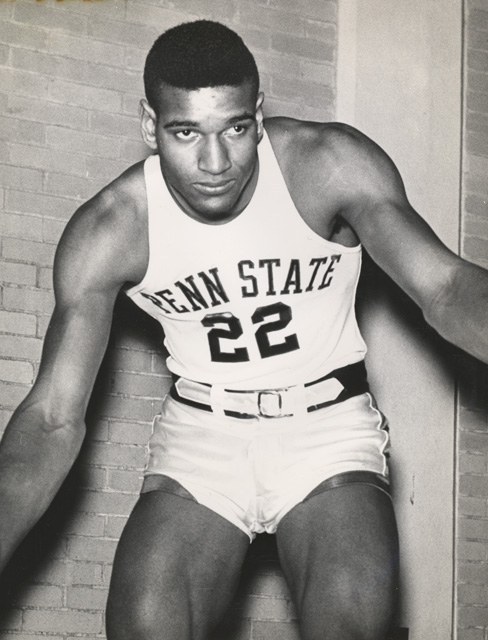
Jesse Arnelle came to Penn State to play football and earned All-America honorable mentions as a receiver. He was even better as a basketball player, becoming the men’s basketball program’s first first-team All-Amercian and leading it to three NCAA Tournament appearances — including the 1954 Final Four. He remains atop Penn State’s career rebounding list (1,238) and was the program’s leading scorer (2,138 points) for 56 years. Arnelle still holds a handful of program records, including most points in a a half (30) and most rebounds in a game (27). He was the first Penn Stater to player to play in the NBA, for the Fort Wayne Pistons (they advanced to the NBA Finals that season), and later played for the Harlem Globetrotters. Arnelle was Penn State’s first Black student body president and first Black member and chair of the Penn State Board of Trustees. After his playing career ended, he served in the U.S. Air Force and the Peace Corps. After that, he built a long, successful career as a lawyer.
(Photo via blackhistory.psu.edu)
LaVar Arrington
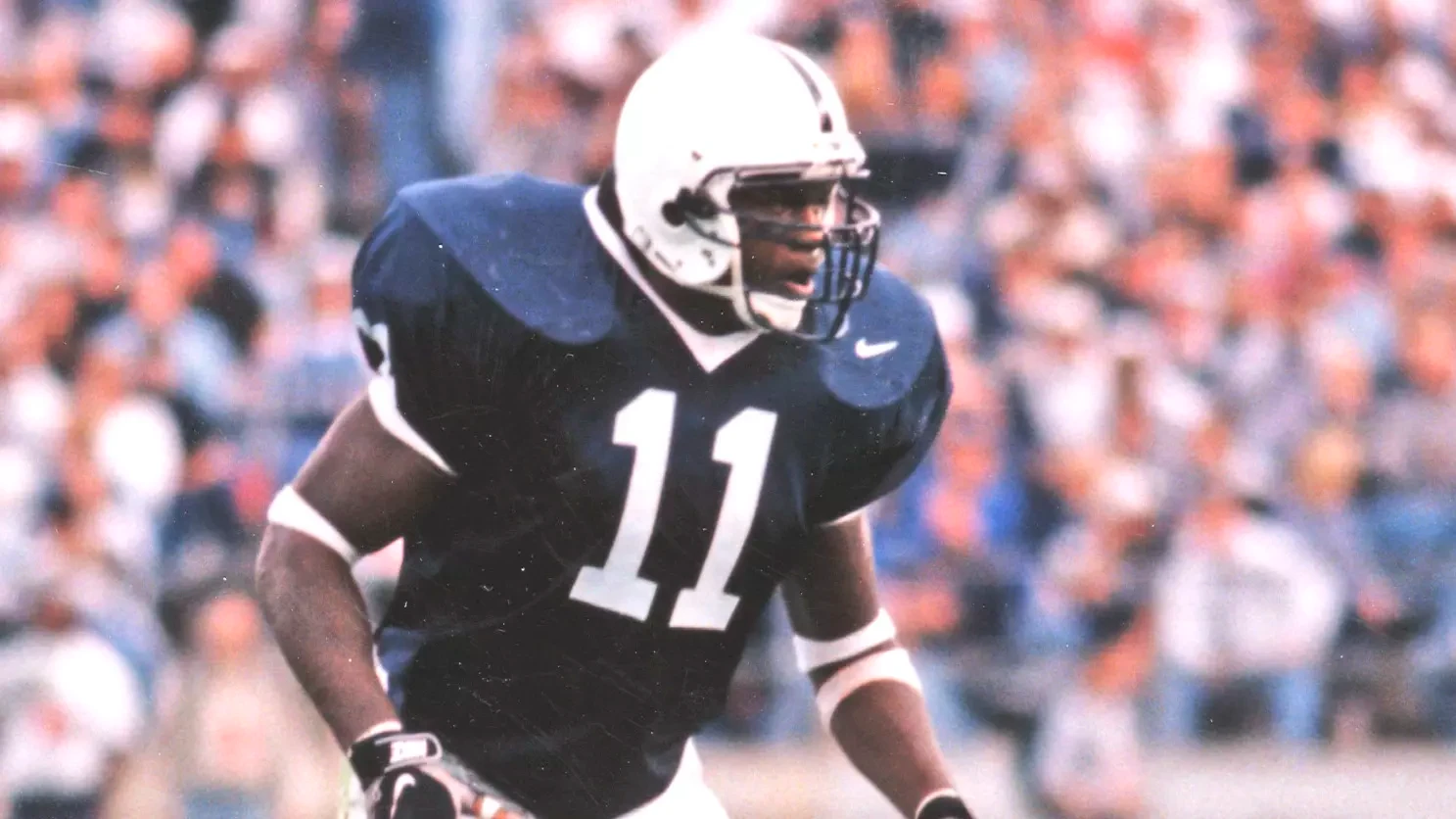
Years: 1997-1999
Sports: Football
Positions: Linebacker
Read More
(Photo via GoPSUSports.com)
Saquon Barkley

Years: 2015-2017
Sports: Football
Positions: Running Back
Read More
(Photo via GoPSUSports.com)
John Cappelletti
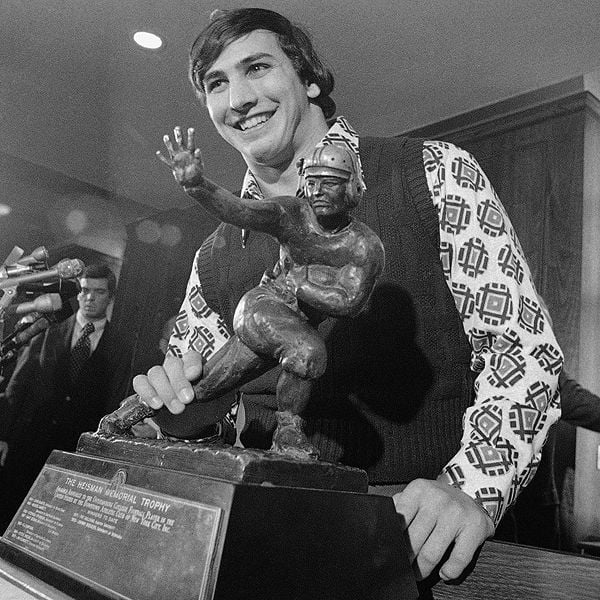
Years: 1969-1973
Sports: Football
Positions: Running Back
Read More
(Photo via Heisman.com)
Barney Ewell
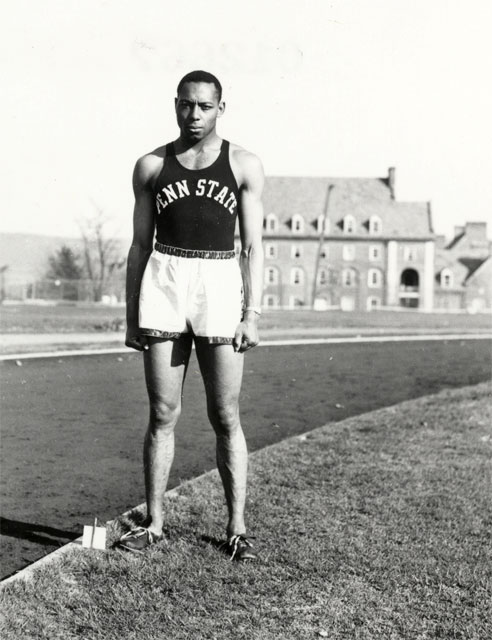
Years: 1939-1942, 1947
Sports: Track
Position: Sprinter, Jumper
Read More
(Photo via blackhistory.psu.edu)
Fran Fisher

Years: 1966-2015
Sport: Contributor
Read More
(Photo via psucollegian.com)
Jack Ham
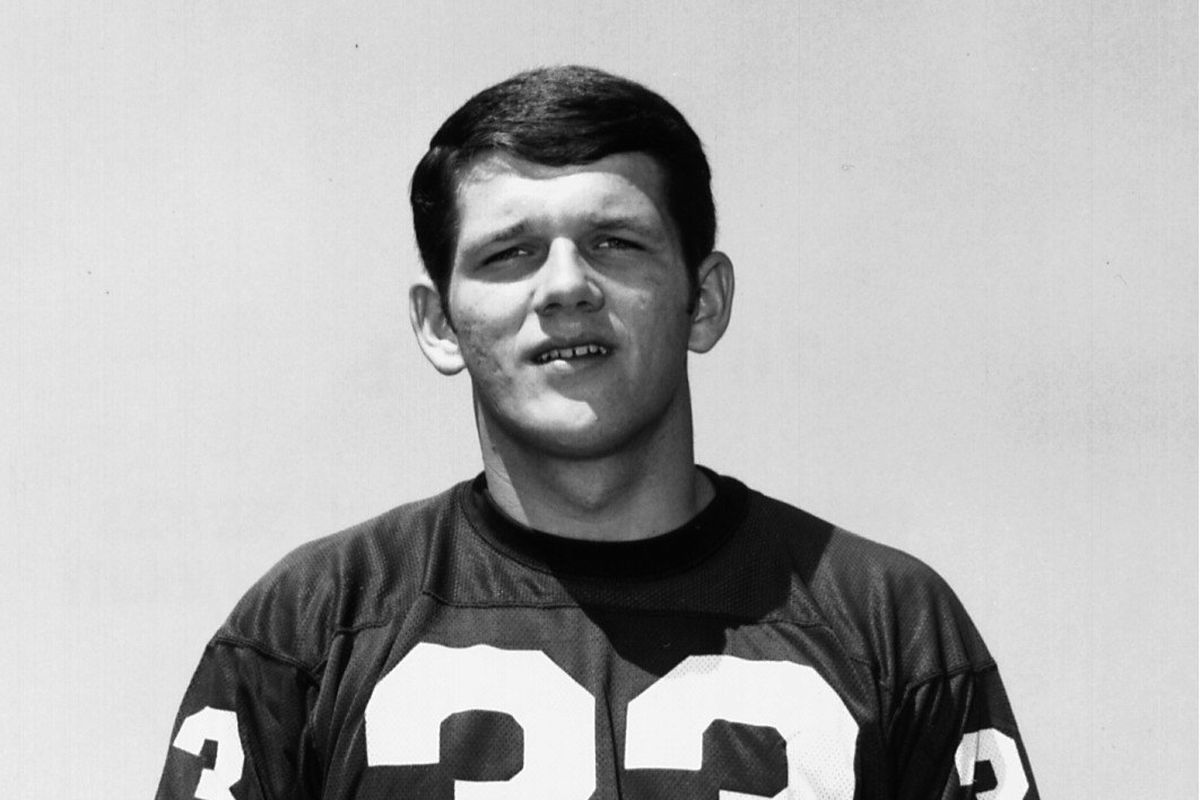
Years: 1968-1970
Sports: Football
Positions: Linebacker
Read More
Considered by many to be Penn State’s greatest football player ever, Jack Ham spent three seasons as the leader of the Nittany Lions’ defense where he helped guide the team to two back-to-back undefeated seasons. In 1970, Ham recorded 91 tackles and four interceptions, earning All-American status. Ham would then go on to be a part of the Pittsburgh Steelers’ legendary defense in the 1970s before retiring from football. He is one of two Penn Staters to be enshrined in both the College Football and Pro Football Hall of Fames. Ham has also spent the last 25 seasons as a part of Penn State’s radio broadcast — providing an essential voice to the booth along with Steve Jones.
(Photo via footballfoundation.org)
Franco Harris
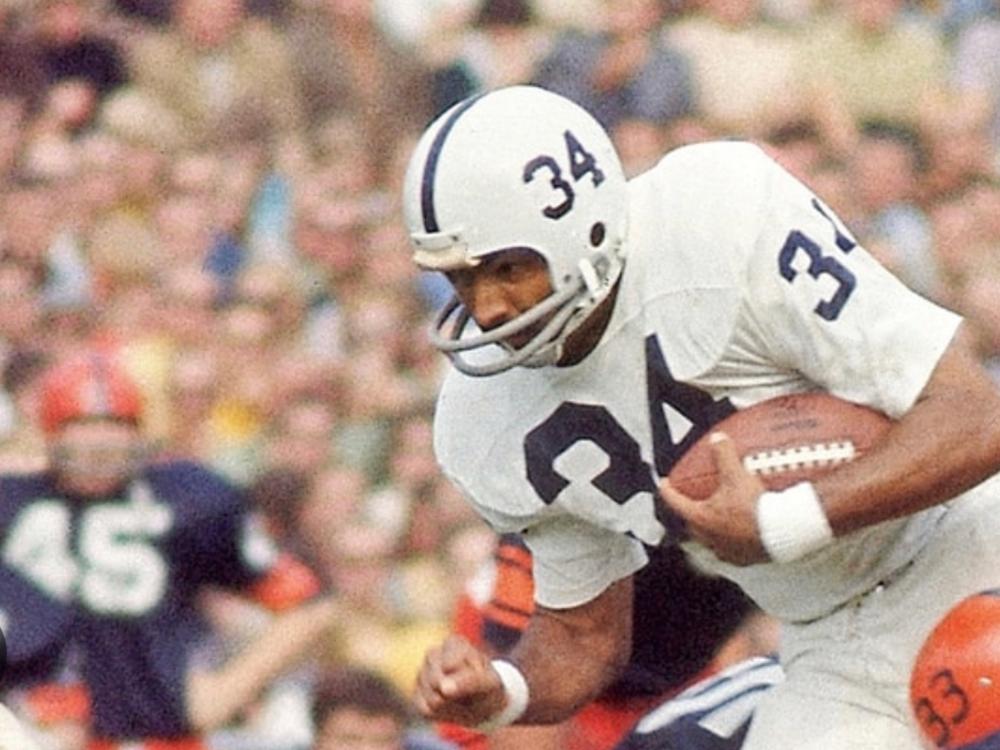
Years: 1967-1971
Sport: Football
Position: Running Back
Read More
(Photo via GoPSUSports.com)
Megan Hodge Easy
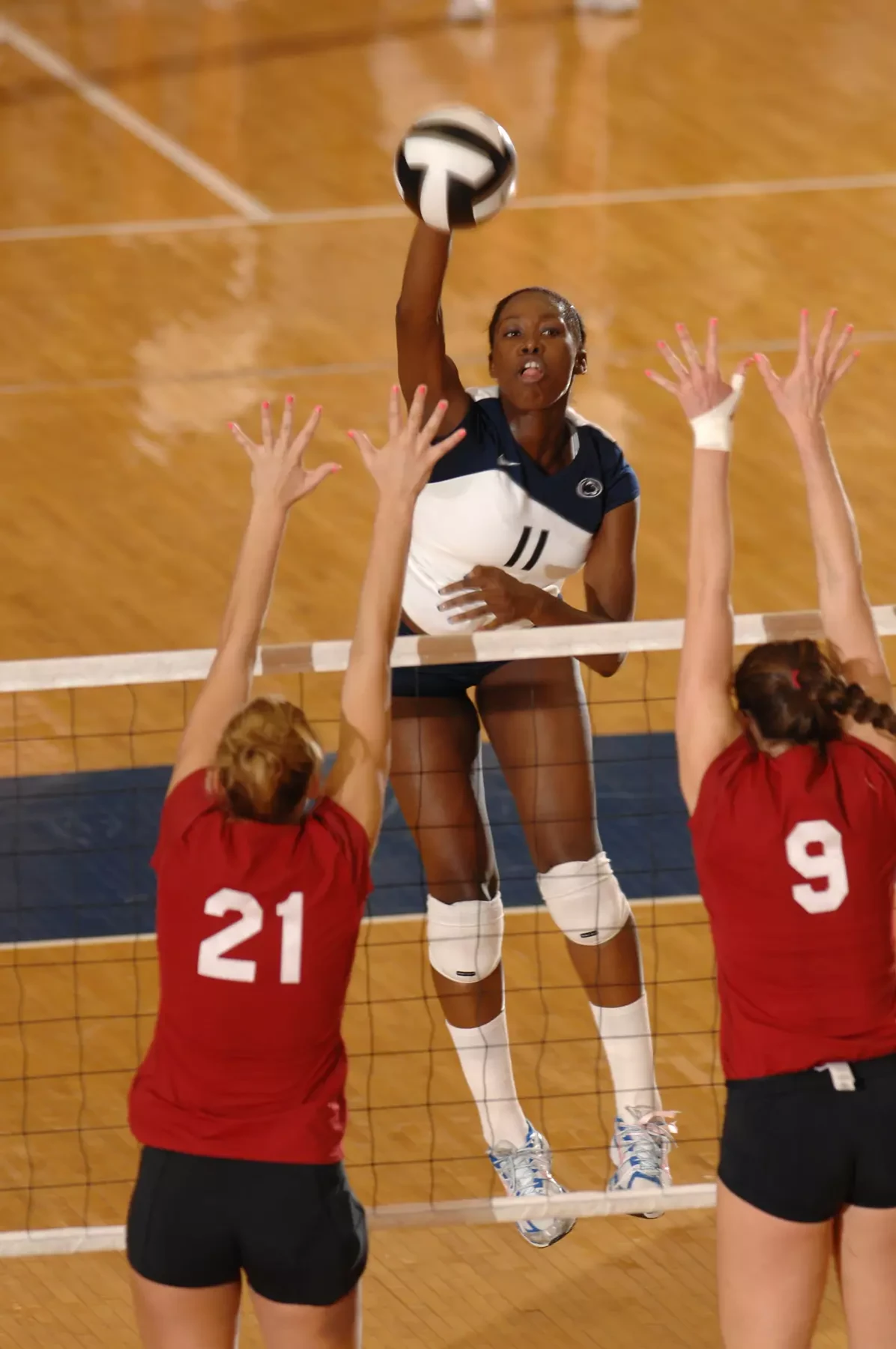
Years: 2006-2009
Sports: Volleyball
Positions: Outside Hitter
Read More
(Photo via GoPSUSports.com)
Ali Krieger
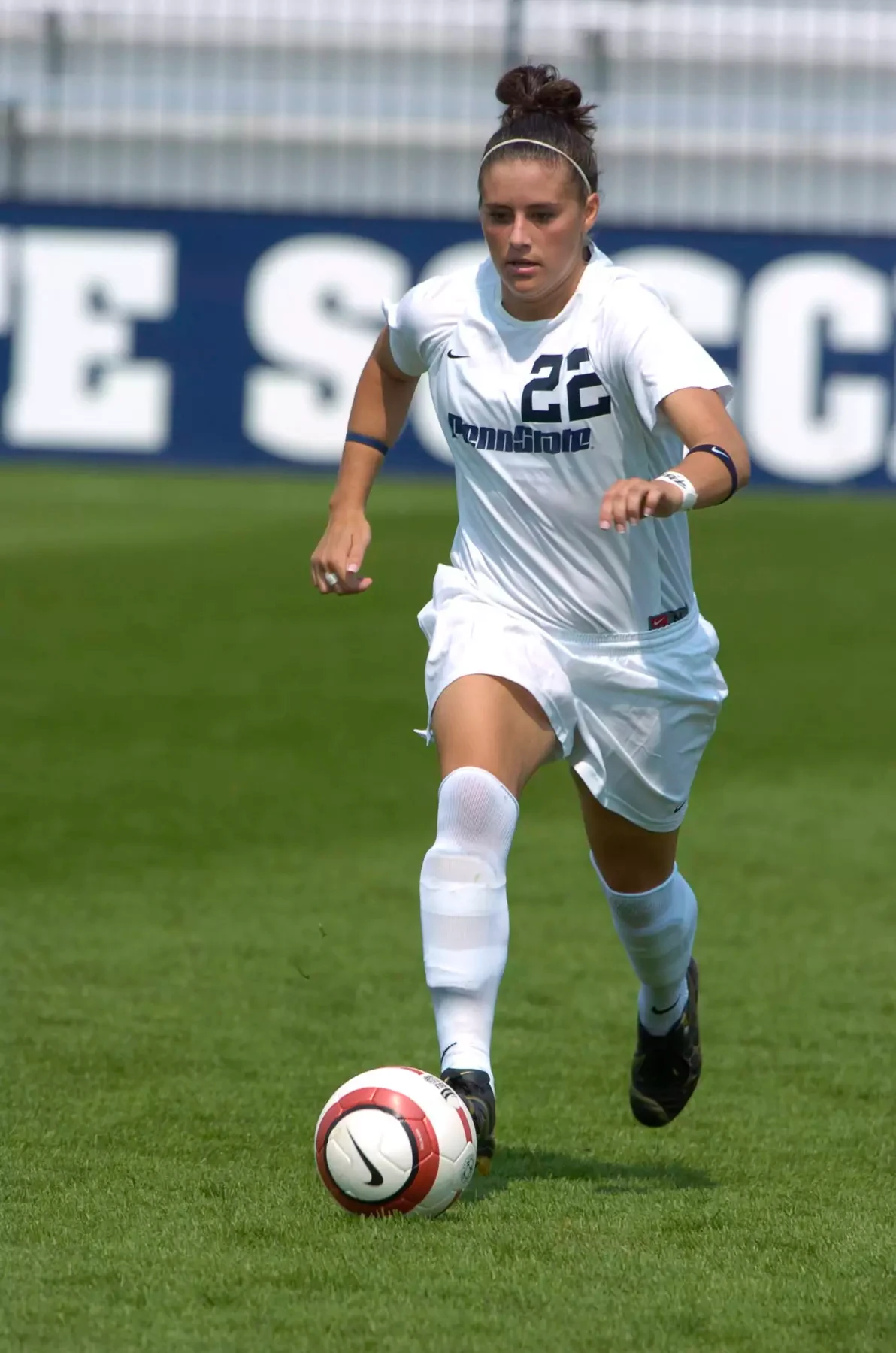
Years: 2003-2006
Sport: Soccer
Position: Midfielder, Defender
Read More
(Photo via GoPSUSports.com)
Suzie McConnell-Serio
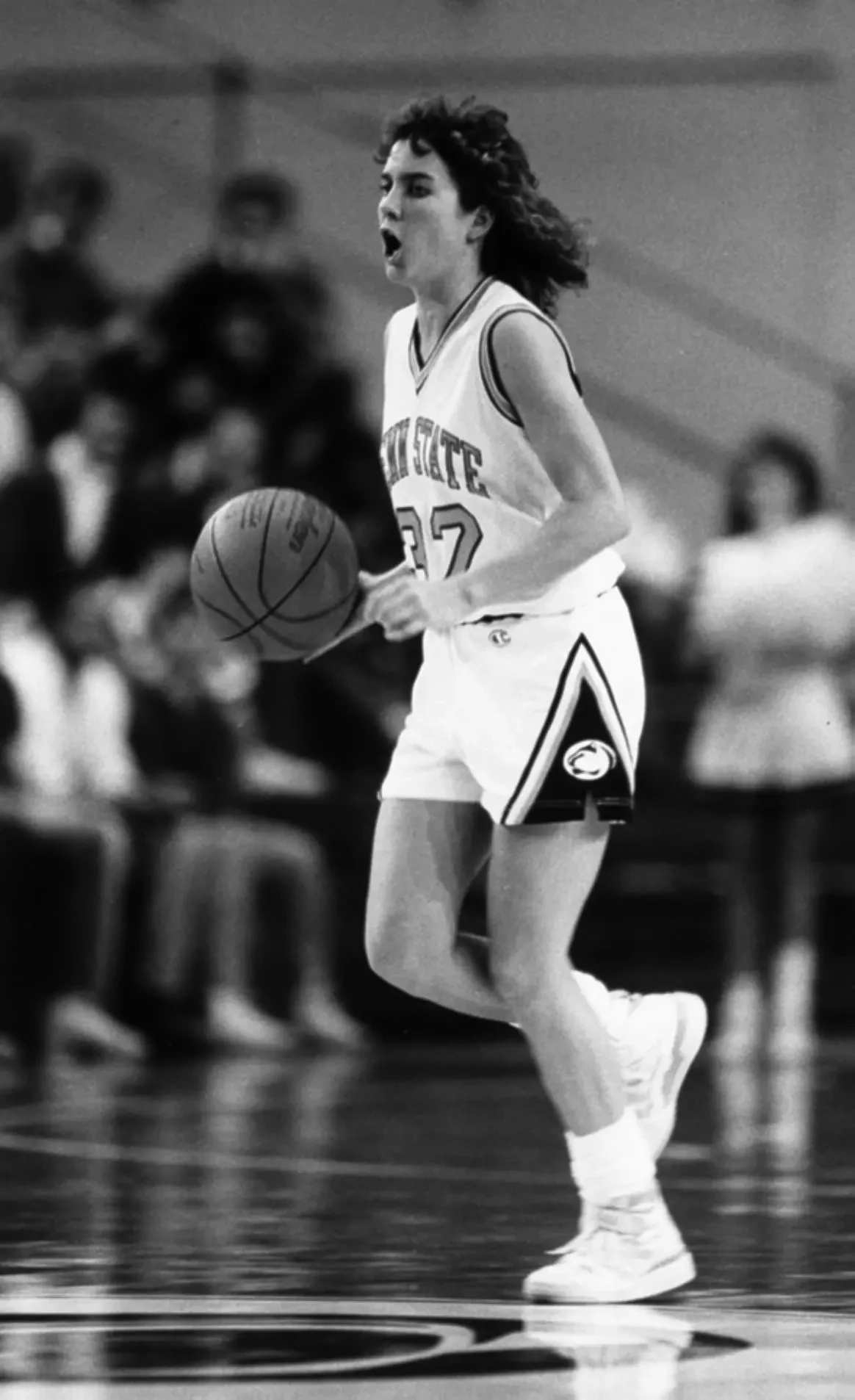
Years: 1984-1988
Sport: Basketball
Position: Guard
Read More
(Photo via GoPSUSports.com)
Charlene Morett-Curtiss

Years: 1975-2023
Sport: Field Hockey
Position: Player, Coach
Read More
(Photo via GoPSUSports.com)
Bo Nickal

Years: 2014-2019
Sport: Wrestling
Position: 174, 184, 197 lbs
Read More
(Photo via GoPSUSports.com)
Joe Paterno

Years: 1950-2011
Sport: Football
Position: Coach
Read More
Russ Rose

Years: 1979–2021
Sport: Volleyball
Position: Coach
Read More
No one has more wins in Division I women’s volleyball history. No one has more national championships in Division I women’s volleyball history than Russ Rose. After spending time as an assistant at Nebraska in the 1970s, Rose took over Penn State in 1979 and changed so much for Penn State women’s volleyball. In 41 years, Penn State never missed an NCAA tournament. Rose first led Penn State to a national championship in 1999 before winning four in a row from 2007 to 2010. During that stretch, Penn State won 109 straight matches from 2007 to 2008. In the 2008 season, Penn State never lost a set until the national semifinal where it beat Nebraska 3-2 before beating Stanford in a sweep for the national championship. He would then guide Penn State to two more national titles in 2013 and 2014. He produced 112 AVCA All-Americans and 14 Big Ten Players of The Year. In addition to coaching, Rose taught a sports ethics class at Penn State.
(Photo via GoPSUSports.com)
David Taylor

Years: 2011-2014
Sport: Wrestling
Position: 157, 165 lbs
Read More
Another key piece to Penn State’s mids 2010s dynasty, David Taylor won two individual national championships at 165 pounds under Cael Sanderson. His effort earned him two Dan Hodge Trophies and won 134 matches in his time at Penn State, with two of his three losses coming in the national final in 2011 and 2013. After graduation, Taylor developed into one of the world’s best individual wrestlers, winning three world championships and a gold at the 2020 Tokyo Games in the 86 kg weight class. In trying for his second Olympics, Taylor lost to Penn State’s Aaron Brooks at the US Olympic Trials, effectively ending his shot at another gold medal, which ultimately resulted in him becoming Oklahoma State’s wrestling head coach.
(Photo via GoPSUSports.com)
Gene Wettstone

Years: 1939-1976
Sport: Gymnastics
Position: Coach
Read More
Visionary coach Gene Wettstone started the men’s gymnastics program at Penn State and led the program to a record nine national championships and 13 Eastern Intercollegiate Gymnastics League titles. Under his direction, Penn State amassed more than 200 dual meet victories and produced 35 individual national champions and 13 Olympians. He was known as an innovator in the gym and as a promoter of the sport. Meets inside Rec Hall were some of the most well-attended in the nation during his tenure, including 8,114 fans for a meet against Southern Connecticut State on Feb. 4, 1978. Penn State hosted three men’s national championship meets during his tenure. Wettstone was a two-time head coach of the U.S. Olympic team (1948, 1956) and manager of the 1976 squad. He was an Olympic judge in 1952 and 1968, and served on the U.S. Olympic Committee for 20 years. He was inducted into the United States Gymnastics Hall of Fame in 1963.
(Photo via GoPSUSports.com)
Bios compiled by Darian Somers and Steve Sampsell.
Voting was open to the public and done in a nominee stage with top nominees being moved into the voting stage. The goal is to add a new class annually.
For more about StuffSomersSays.com, click visit our home page or about page. Additionally, you can sign up for our newsletter here.
All images via GoPSUSports.com unless otherwise noted.