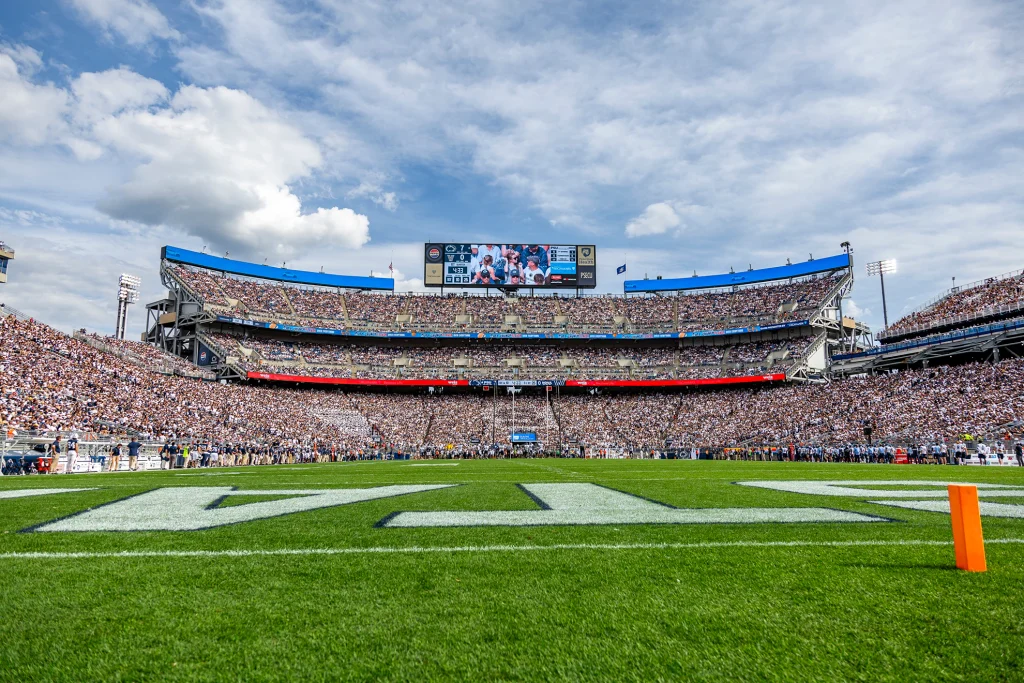
At this point it’s up to fans to buy or renew, but so far Penn State Athletics has done a good job rolling out its football season ticket options inside a revamped Beaver Stadium.
With changes coming for 2027 and beyond, especially in prices for some fans, the pitch and promotion have been by-the-numbers and professional. Things might feel consultant-influenced and standardized rather than traditional, but that’s expected — and no doubt those in charge hope it’ll be effective as well.
Penn State let season ticket holders know a day in advance that an announcement was coming and the news that followed was detailed, including a pricing and stadium seating map with more than a dozen colors and multiple ticket price points. There was also a Beaver Stadium Virtual Venue so fans could get a look at the view from any seat they might want to consider.
Those are necessary touches in any sales plan. And for me, with a typically eight-crayon color palette, the variety of options was impressive. Of course, that allows Penn State to tout that it has options for people who have a variety of means and willingness to invest in the program.
At the same time, it’s what consultants pitch and what consumers expect — numerous options as opposed to just three or four price points. Especially in a facility that will seat more than 100,000 fans.
That said, with ticket maps available and commitments requested by October to lock in prices for the next two seasons, it does seem like a firm number of tickets available for 2027 and beyond — and thereby a capacity for a renovated Beaver Stadium — should be known by someone.
Still waiting for that to become public, though. Or maybe there really are 1,000 or so seats in flux depending on how things play out in the next year and whether it’s specifically 107K or 109K might not be known until some final pieces get set.
Penn State complemented its rollout a couple of days later by announcing a fan rewards program — a partnership with Uptop that created pennstaterewards.com and promised to reward fans for their passion and support. That effort felt similar to the blockchain partnership with Socios.com that was announced earlier this summer. They’re different things, no doubt, but similar in the tapping-technology-to-build-a-bond way. And the find-every-opportunity-to-leverage-a-buck way.
Still, that’s the new normal and if Penn State were not pursuing such things, it would be professional malpractice. So, in the bigger picture, it’s probably all part of a solid rollout.
It’ll just be different, in the same way that directionally influenced section numbers inside the stadium (WH, EE, SHU and the like) become numbers in the future. First-time fans will still struggle to find their seats. The investment in updating all the stadium signage will easily reach six-figures, and unless the signage improves in some areas it might remain confusing for some.
What’s next, or at least the next big moment, comes Sept. 5, when fans get inside the stadium and experience the changes and upgrades, among them a new north end zone video board, supposedly better sound and almost certainly in-game light displays similar to those at other football stadiums in the not-to-distant future.
If the rollout for the season tickets holds, though, those things might come off well — even if they’re different for some fans who’ve been following Penn State football for decades.
If you’ve enjoyed this content, please subscribe to Stuff Somers Says With Steve on YouTube. Or join our newsletter by entering your email below.